MCAS and EDS: Why They So Often Travel Together

What Are Mast Cells?
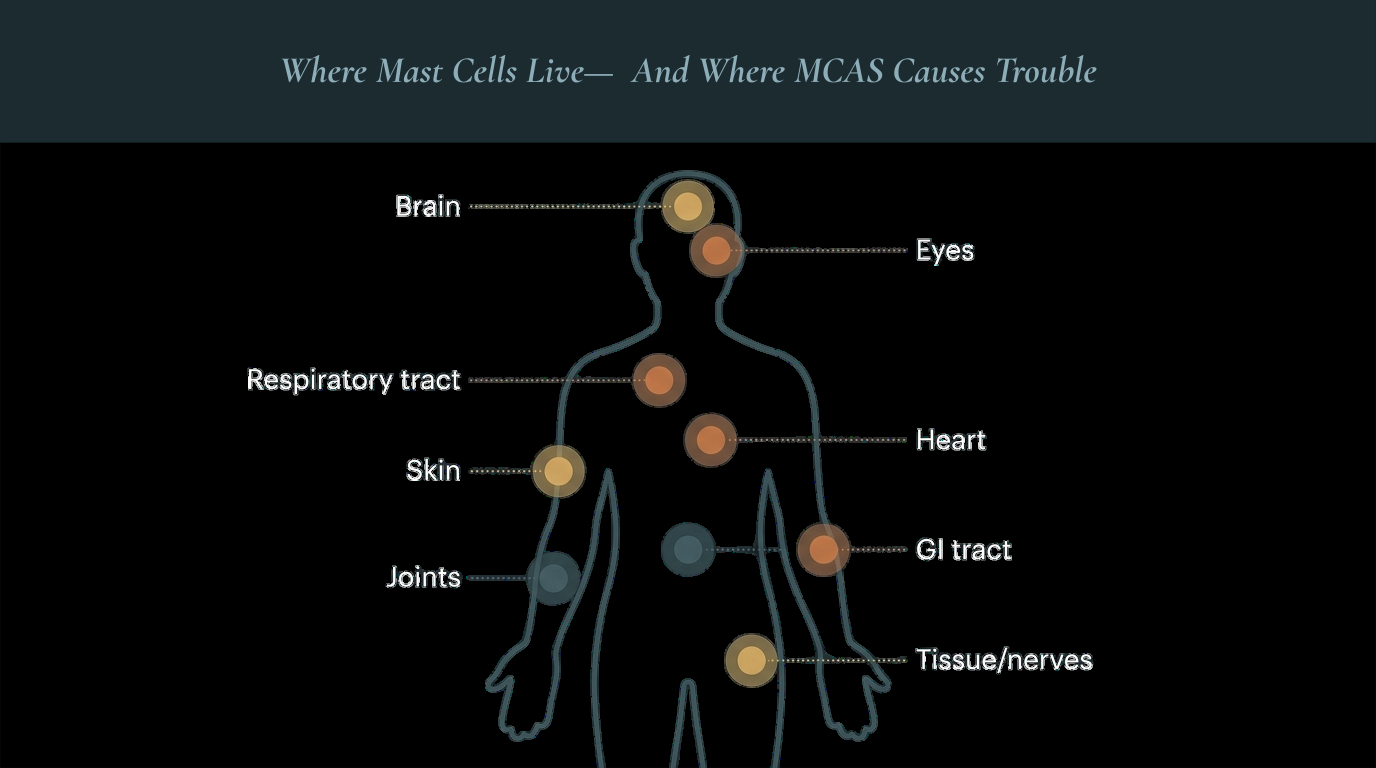
Mast cells are white blood cells that live in your tissues rather than your bloodstream. They position themselves wherever your body meets the outside world — respiratory tract, gut, skin, nervous system, blood vessels, and brain. Their job is to act as your body's first line of defense, detecting threats and releasing chemical signals called mediators to fight them off.
When mast cells work properly, they protect you. When they malfunction — activating inappropriately or releasing mediators without a legitimate threat — the resulting inflammation can affect virtually any system in the body. This is mast cell activation syndrome, or MCAS.
The Testing Problem — Why MCAS Gets Missed
One of the most important things to understand about MCAS diagnosis is that standard blood tests — tryptase in particular — frequently come back normal even in people who do have MCAS. This is well documented in the research and has been extensively discussed by specialists including Dr. Lawrence Afrin, who co-authored the foundational diagnostic criteria for MCAS.
Tryptase is only elevated in a subset of MCAS patients, and it must be drawn within 15 to 30 minutes of a reaction to be meaningful. Most mast cell mediators beyond tryptase are not part of standard panels. MCAS is increasingly understood as a clinical diagnosis supported by the pattern of symptoms and response to treatment — not a lab diagnosis confirmed by a single blood test.
The EDS-MCAS Connection
The overlap between EDS and MCAS is well documented, though precise mechanisms are still being studied. Current thinking suggests that connective tissue abnormalities in EDS may create an environment in which mast cells are more easily triggered. Some researchers propose that mast cells themselves may contribute to connective tissue instability through the mediators they release — a potentially bidirectional relationship.
MCAS Beyond the Obvious — Skin, Eyes, and Surgical Healing
MCAS manifests differently in every person. Beyond the commonly discussed symptoms of gut pain and allergic reactions, mast cell dysfunction can drive inflammatory eye conditions such as uveitis and iritis, skin conditions including polymorphic light eruption — a sun allergy that produces welts and red bumps — and significantly impaired surgical healing through effects on tissue and nerve regeneration.
The skin and sun sensitivity connection is particularly underrecognized. Rapid environmental changes — such as moving from cold to hot temperatures quickly — can trigger mast cell reactions in susceptible individuals, producing skin responses that look like allergic reactions but are driven by thermal and UV mast cell activation.
MCAS also significantly impacted my surgical recovery. My tissue and nerve regeneration were affected in ways surgeons didn't anticipate — wound healing complications that added layers of difficulty to recoveries that were already complex because of my EDS.